Selecione seu idioma e localização

Versão global do landisgyr.com

Blog

New York Didn’t Just Approve Surent™. It Reinforced What Good Engineering Looks Like.

The recent approval of the Surent™ ultrasonic smart gas meter by the New York Public Service Commission is an important milestone for Landis+Gyr. It also has important implications for utilities evaluating next generation gas infrastructure. 

New York is one of the most demanding regulatory environments in North America for advanced gas metering. Approval requires far more than a promising feature set or a successful lab demonstration. It requires a utility-grade product to stand up to rigorous technical review and detailed testing, and scrutiny around safety, reliability, and operational performance. 

Landis+Gyr’s ultrasonic gas meter technology already has more than 20 million installations globally, accumulating billions of operating hours in real-world utility environments. Still, independent validation by one of the industry’s toughest regulators matters, especially since what was validated is not just a meter; it is an engineered ultrasonic smart gas operating platform. 

Let’s take a look at what that means for today’s utilities. 
Smart gas meters are becoming more capable—and more complex

Utilities now expect far more from a residential gas meter than accurate billing data. The modern smart gas meter is also expected to support remote shutoff, pressure and temperature sensing, alarm and event management, edge intelligence, cybersecurity, and communications architectures capable of supporting grid modernization strategies.

As those expectations have grown, many products in the market have been cobbled together by integrating technologies from multiple suppliers: an ultrasonic platform from one source, a valve from another, communications hardware from a third, and software layered across the top.

A meter assembled from proven components may look comparable on a specification sheet. It may even perform well in many scenarios. But long-term utility performance is not determined by whether each part works individually. It is determined by whether the full system continues to work together across years of real-world operation, changing environmental conditions, and thousands of edge cases that no feature table can fully capture.

Safety does not happen at the component level

That point becomes obvious the moment a meter is asked to do something consequential. We can see that when we examine common operational events.

A remote shutoff is not just a valve event. It depends on accurate measurement, trusted sensing, control logic, power management, communications integrity, and the ability of the system to execute correctly under the conditions that triggered the action.

A high-flow or abnormal usage alarm is not just a sensing event. It depends on the quality of the measurement data, the software logic interpreting that data, the diagnostics behind it, and the communications path that gets meaningful information back to utility operations.

A pressure-related event is not just about a pressure sensor. It is about whether the meter can detect the condition, interpret it correctly, and support a safe operational response.

These are not component events. They are system events. 

That is why the difference between “assembled” and “engineered” matters so much more in gas than it does in most other product categories. When gas utilities are exposed to risk, they do not experience failures at the level of a purchased valve, a communications module, or a sensing element. They experience failures when the meter platform does not work together as a system. 

Surent™ was engineered from the beginning as a smart gas platform

Surent was developed around a different premise: the safest and most reliable smart gas meter is not created by combining capable technologies at the end of a development process. It is created by engineering those technologies to work together from the beginning.

Measurement, sensing, valve operation, diagnostics, communications, software, and power management were designed as elements of a single platform, with each subsystem developed in the context of how it would interact with the others over the life of the asset.

This engineering distinction affects how the meter behaves in the field, how consistently it performs over time, how effectively it supports safety-related functions, and how confidently a utility can deploy it at scale – in other words, how reliable it is. 

For Surent, reliability is the outcome of disciplined system engineering.

Why the New York approval matters

A residential gas meter may remain in service for twenty years or more, and is expected to serve as a key part of a utility’s safety strategy, customer service operation, and operational intelligence platform. Utilities have every reason to look for independent proof that the technology they are deploying can perform to those expectations.

That is why the New York approval carries weight.

 It does not replace the evidence created by decades of field deployment. It adds to it. It reinforces it. It subjects the platform to one of the most demanding independent technical evaluations in the industry and confirms that the product can meet its requirements. This kind of rigorous, external confirmation matters—particularly in an industry where safety, reliability, and long-term operational performance are non-negotiable.

For Landis+Gyr, that is a milestone worth being proud of. For utilities, it is a confirmation of trust. 

See the results of NY PSC testing of the Surent G480 Ultrasonic Gas Meter Here: NYSDPS-DMM: Matter Master

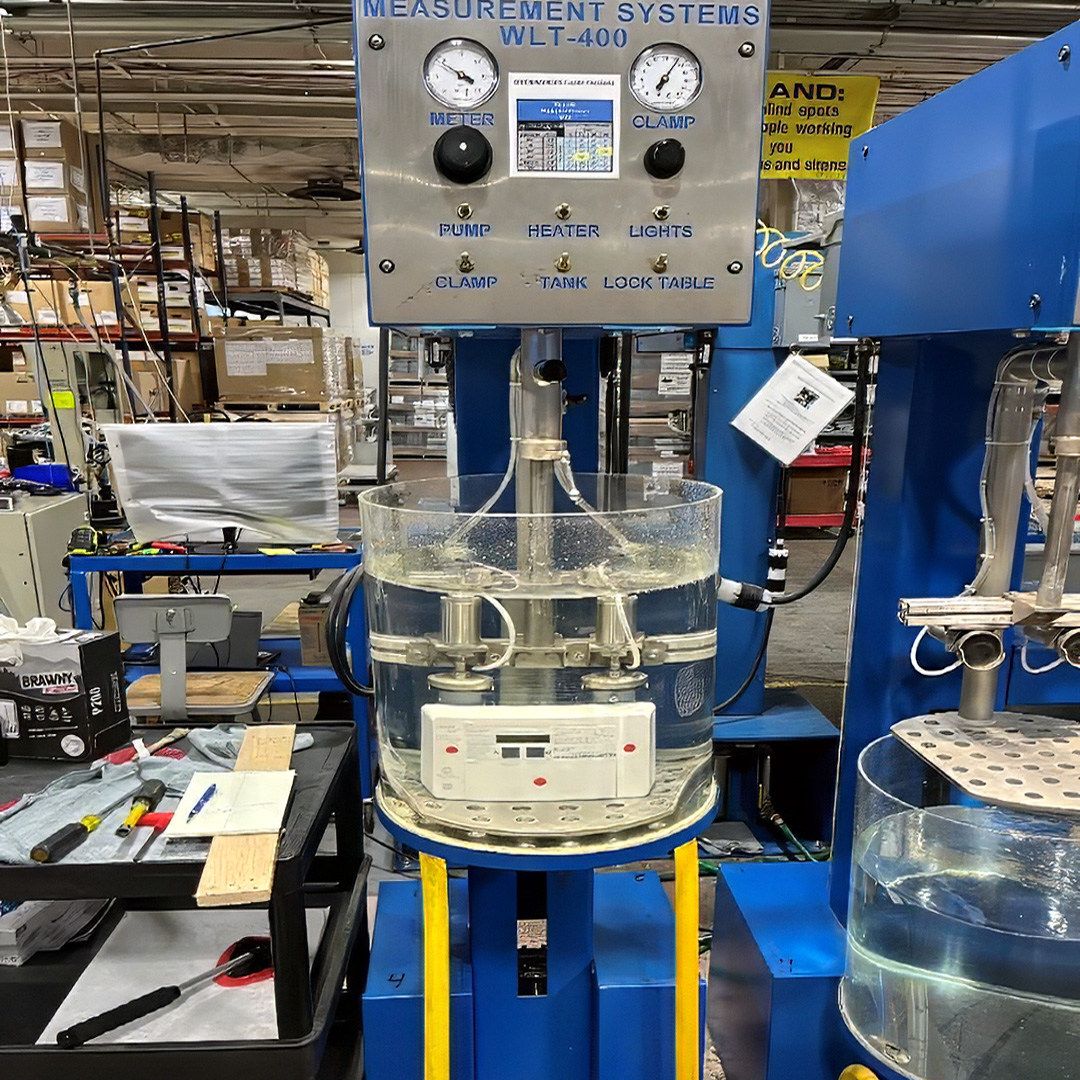
Surent G480 ultrasonic gas meter submerged in water A Landis+Gyr G480 meter being leak tested on a Measurement Systems Leaks Tester

Author

Recent Blogs