
.jpg)

Dois anos atrás, em abril de 2024, um pedido discreto foi feito à FCC com um pedido enorme: a NextNav, uma empresa de Posicionamento, Navegação e Temporização (PNT) com histórico de fusões em telecomunicações, solicitou uma mudança na regra que permitiria construir uma rede de operações de banda larga de alta potência. A tecnologia 5G da NextNav funcionaria tanto como backup de GPS quanto como capacidade de banda larga de baixa banda, apoiando a "segurança nacional" ao reforçar 16 setores críticos de infraestrutura que dependem dos sinais de GPS fracos de hoje.
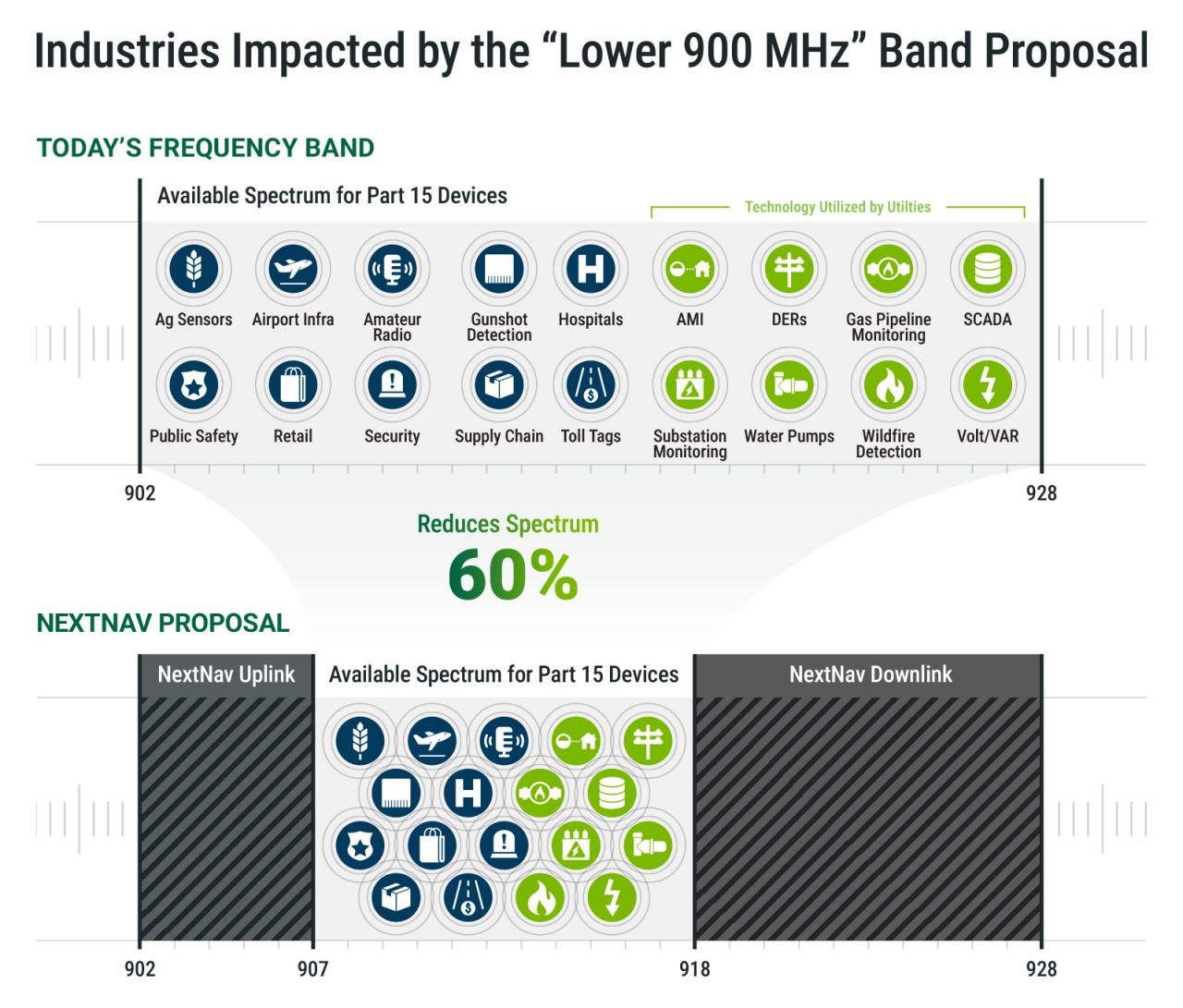
A proposta parece atraente, mas traz custos substanciais e métodos questionáveis. Além de simplesmente buscar direitos de licenciamento adicionais e ampliados, o pedido propôs privatizar uma faixa maior da faixa inferior de 900 MHz (902-928MHz), uma faixa que foi reservada e é amplamente utilizada para comunicações críticas de dispositivos de espectro não licenciados desde 1985. Se concedida, espera-se que a nova ocupação do espectro cause perturbações substanciais em diversos setores. Somente para as concessionárias elétricas, o custo para substituir apenas 10% dos dispositivos impactados é estimado em 10 bilhões de dólares, segundo uma carta ex parte da ecobee, Itron e Landis+Gyr.
As concessionárias dependem fortemente dessa faixa para apoiar operações críticas da rede. Ele serve como os "olhos e ouvidos" da rede por meio de medição inteligente e comunicações, sistemas SCADA, monitoramento DER e outras funções essenciais. A restrição da faixa proposta pela NextNav poderia resultar em menor confiabilidade da medição inteligente e do controle da rede, resultando em riscos para a segurança pública e a estabilidade da rede (por exemplo, capacidades remotas de monitoramento/desligamento).
Aqui estão cinco pontos-chave que você precisa saber sobre este processo:


.png/_jcr_content/renditions/cq5dam.zoom.2048.2048.jpeg)
.png/_jcr_content/renditions/cq5dam.zoom.2048.2048.jpeg)
.png/_jcr_content/renditions/cq5dam.zoom.2048.2048.jpeg)


.jpeg/_jcr_content/renditions/cq5dam.zoom.2048.2048.jpeg)